
Stop "Should-ing" on Yourself: What Ahimsa Actually Asks of Us

There's a joke I make in class that always lands.
I tell my students: one of the most powerful practices in yoga is to stop "should-ing" on yourself.
You can imagine why that gets a laugh.
But I mean it. And the more I teach, the more I believe that the "should" voice is one of the most common forms of violence we commit, against our loved ones and co-workers, against the news cycle, and especially against ourselves. Every single day.
What Ahimsa Actually Means
Ahimsa is the first of the Yamas, the ethical guidelines that form the foundation of yoga practice found in the Yoga Sutras. Most translations offer "non-violence" or "non-harming." These are accurate. But they're also a little flat.
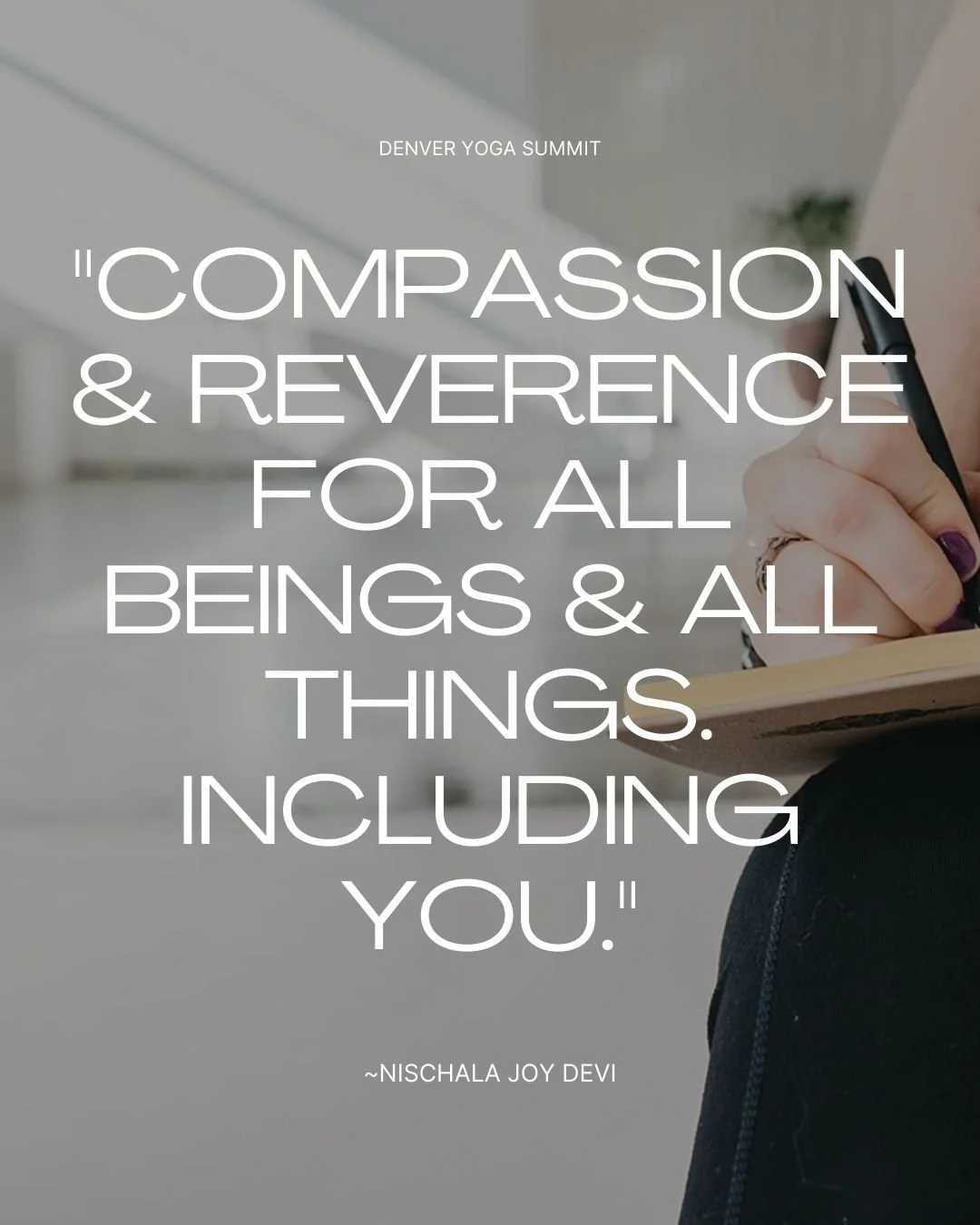
Nischala Joy Devi, whose work in The Secret Power of Yoga offers a feminine translation of Patanjali's Sutras, translates ahimsa as "compassion and reverence for all beings and all things." That framing changes everything. It's not just about what you stop doing. It's about what you actively bring. Compassion. Reverence. Presence.
Nischala Joy Devi has taught yoga philosophy to students around the world, and her translation of the Sutras teaches that reverence shows up in how we handle the world around us. Closing a drawer gently instead of slamming it. Putting your phone down when someone is talking to you. These are not small things. They are the practice made physical.
Deborah Adele wrote in her book about The Yamas and Niyamas, pushes further. She writes that looking honestly at ourselves takes great courage, and that the looking itself begins to free us. Just being aware begins to heal. That idea has stayed with me for years. Because we can't practice ahimsa toward ourselves or others if we're not willing to first notice where the harm is coming from.
The "Should" Voice
So where does the harm actually come from? For most of us, it starts with a word said by a wounded part of ourselves known in yoga as the ego.
I should be better at this by now.I shouldn't have said that.I should know how to do this pose.You should be more patient. You should work harder. You should have figured this out already.
That voice is relentless. And most of us have been living with it so long we don't even notice it anymore. It feels like honesty. It feels like accountability. But it's not. It's violence (himsa). Quiet, constant, and almost entirely invisible because it lives inside us. I’ve named that part of myself Brandi. It helps me create enough distance to be able to accept things. So I can change them.
On the mat, it sounds like: this shouldn't feel so hard or I should be able to go deeper or why does she make it look so easy?
Off the mat, it sounds like a mental tally of every place you fell short. The conversation you replayed three times. The thing you didn't finish. The way you snapped at your kid when you were already exhausted.
The practice of ahimsa (compassion/non violence) asks us to notice that voice. Not to silence it by force, which is its own kind of violence, but to meet it with curiosity. Because it’s usually trying to protect me or let me know something is important to me.
What to Do When You Catch It
When I notice a "should" arising in my practice, the first move is simple: return to something real. The feeling of my feet on the mat. The texture of my breath. My drishti, a single fixed point in front of me. I'm not trying to think my way out of the criticism. I'm just choosing where to place my attention.
Sometimes that's enough.
Other times, I need a little more. I'll say to myself: It makes sense that I feel this way. That's it. A simple moment of acknowledging that whatever is arising has a reason, whether it came from something that happened yesterday or something rooted much deeper. Once I've named that, I can return to my breath and my body with a little more ease.
Don Miguel Ruiz offers something useful here, too. The fourth agreement, always do your best, carries a quiet caveat: your best is different from moment to moment. Some days, my best is a full practice, a class I’m proud of having taught, a patient conversation. Other days my best is getting out of bed. Both count. Ahimsa requires that we let both count.
For the Yoga Teachers Reading This
If you teach, this applies to you in a specific way.
Subtle violence can creep into teaching when we hold too tightly to how we think a pose should look, or how we think a class should go, or how we think we should show up. That tightness is not discipline. It's fear dressed up as standards.
I've noticed it in myself most when I'm struggling. Right now, many of us are teaching through a period of real grief and shock. The state of the world is heavy. And there's a particular pressure that yoga teachers can feel, to be a source of calm and grounding for a room full of people who are also carrying a lot.
But I'm in it too. Some days I walk into a class having spent the morning absorbing hard news, feeling unsteady, and wondering if I have anything real to offer. Ahimsa, toward myself in those moments, means accepting that I can only offer what I actually have. Not what I think I should have.
Deborah Adele writes that it takes more courage to sit quietly in the awareness of our own moral weakness than to try to fix it. I think the same is true of our human limitations. It takes courage to walk into a room and say, through your presence and your sequencing and the way you hold space, I don't have all the answers either. But I'm here.
That is ahimsa in action.
Off the Mat: Your Schedule Is Telling You Something
One of the most violent things I do to myself is my calendar.
A jam-packed schedule is an act of harm. I know this. I've lived it. And I come back to it again and again because the world rewards busy people, and slowing down can feel like falling behind.
It takes courage to do less. It takes courage to protect your children from a schedule that pulls them in six directions before they're old enough to ask for it. It takes courage to cancel something that was never really yours to carry.
The question is: what does adding this actually cost?
Ahimsa Toward Others: The Hard Part
Here's where the practice gets genuinely difficult.
It's relatively easy to be compassionate toward people who are easy to be compassionate toward. Your close friends. Your students who show up consistently. The people who share your values and your worldview.
Ahimsa toward the person who frustrates you, the one whose choices feel incomprehensible to you, the one whose politics make you want to close the door, that's a different ask entirely.
Deborah Adele writes that we are all in the human basket. It is a mixed bag. And the more willing we are to look honestly at the violence that lives in us, the harsh judgment, the dismissal, the moments we "should" someone else into a corner, the more we stop becoming the very thing we're reacting against.
Practicing Ahimsa is the opposite of passivity, condoning harm, or staying quiet when something is wrong. It asks us to examine whether our response is coming from clarity or from reaction. Those produce very different actions in the world.
A Practice to Try This Week
Pick one moment each day when you notice a "should" arising. On the mat, in traffic, in a conversation, wherever it shows up.
When you catch it, don't fight it. Just name it: there's a should.
You could offer that it makes sense that you feel this way. Then feel your feet in your shoes and the breath in your nostrils.
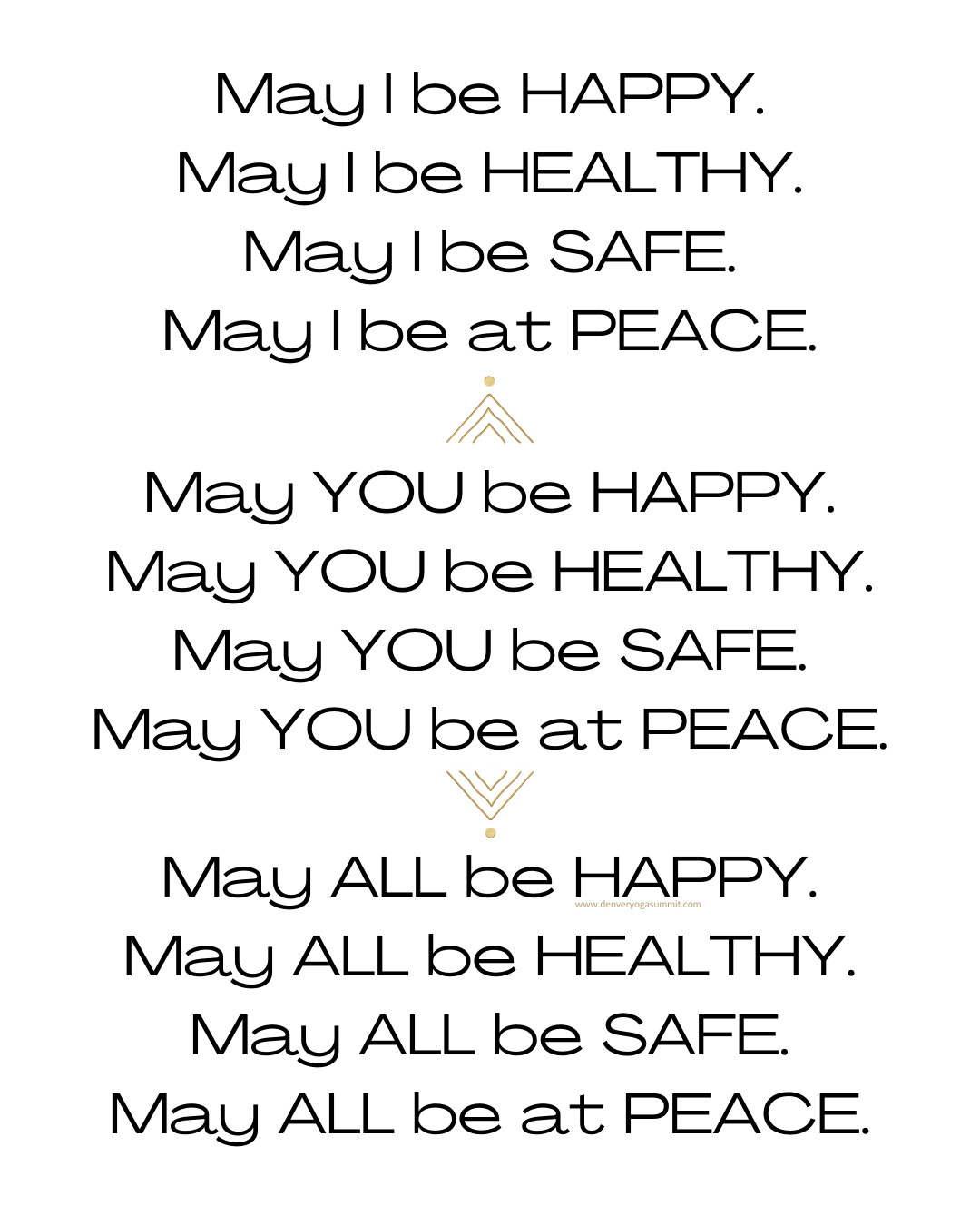
If you want to take it further, try a Metta, or loving-kindness, meditation. It starts with yourself and moves outward, which is exactly the direction ahimsa asks us to travel.
Come Practice With Us
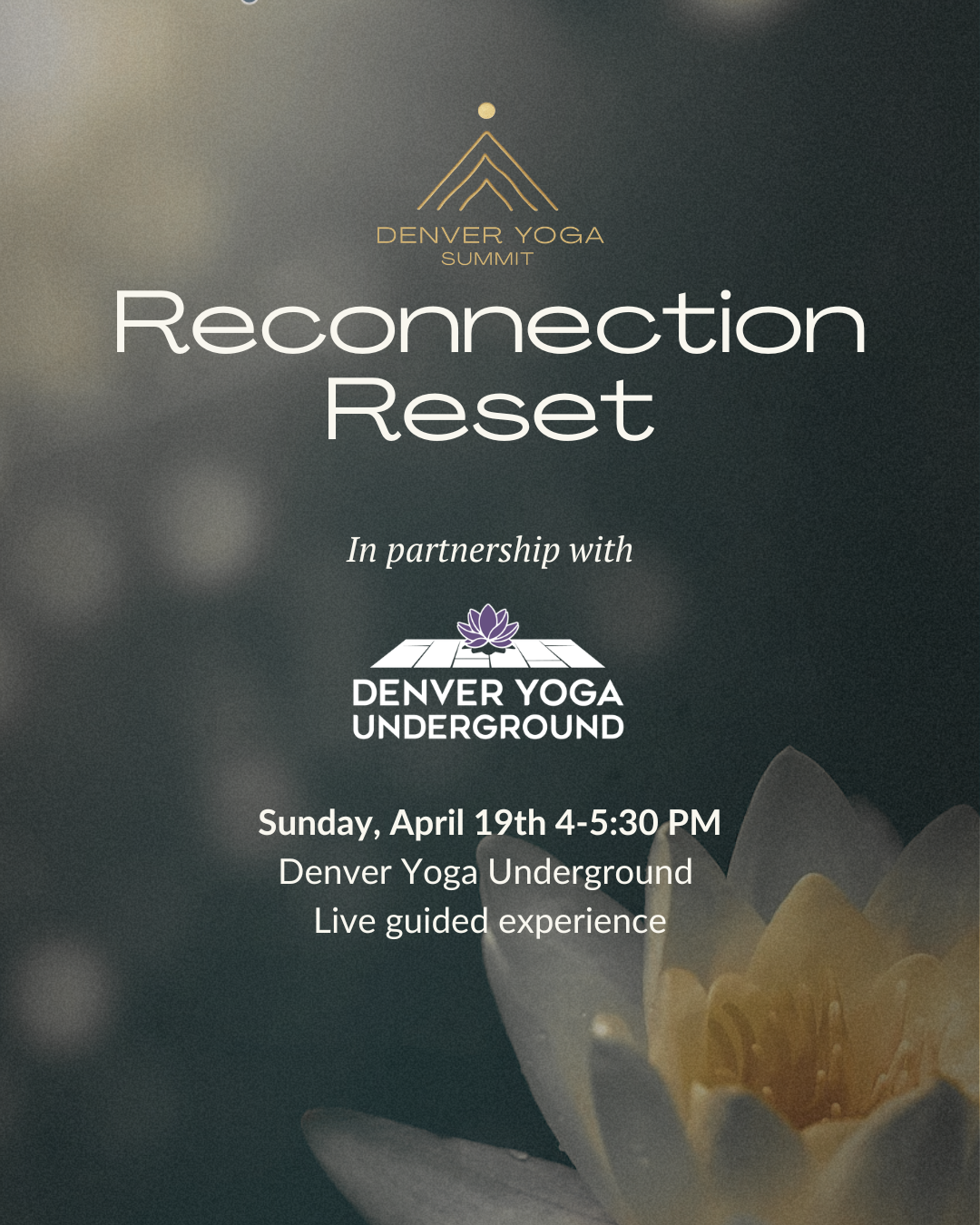
On Sunday, April 19th from 4:00 to 5:30 PM, we're gathering for a Reconnection Reset at the Denver Yoga Underground.
This month's gathering will hold space for exactly this work. Guided journaling, movement, and a sound bath to close. No experience needed.
Always free.
You're welcome exactly as you are.
And if you've been thinking about joining us for the Denver Yoga Summit in September, where Nischala Joy Devi will be teaching in person, early bird pricing is available through April 30th.
If you're new here and want to know why we're building this, read our origin story.
Brittany Hopkins Switlick is the Founder and Director of the Denver Yoga Summit and lead teacher at Lotus Yoga School. She is an E-RYT 500 and author of the Amazon #1 New Release Dancing with Our Selves.