
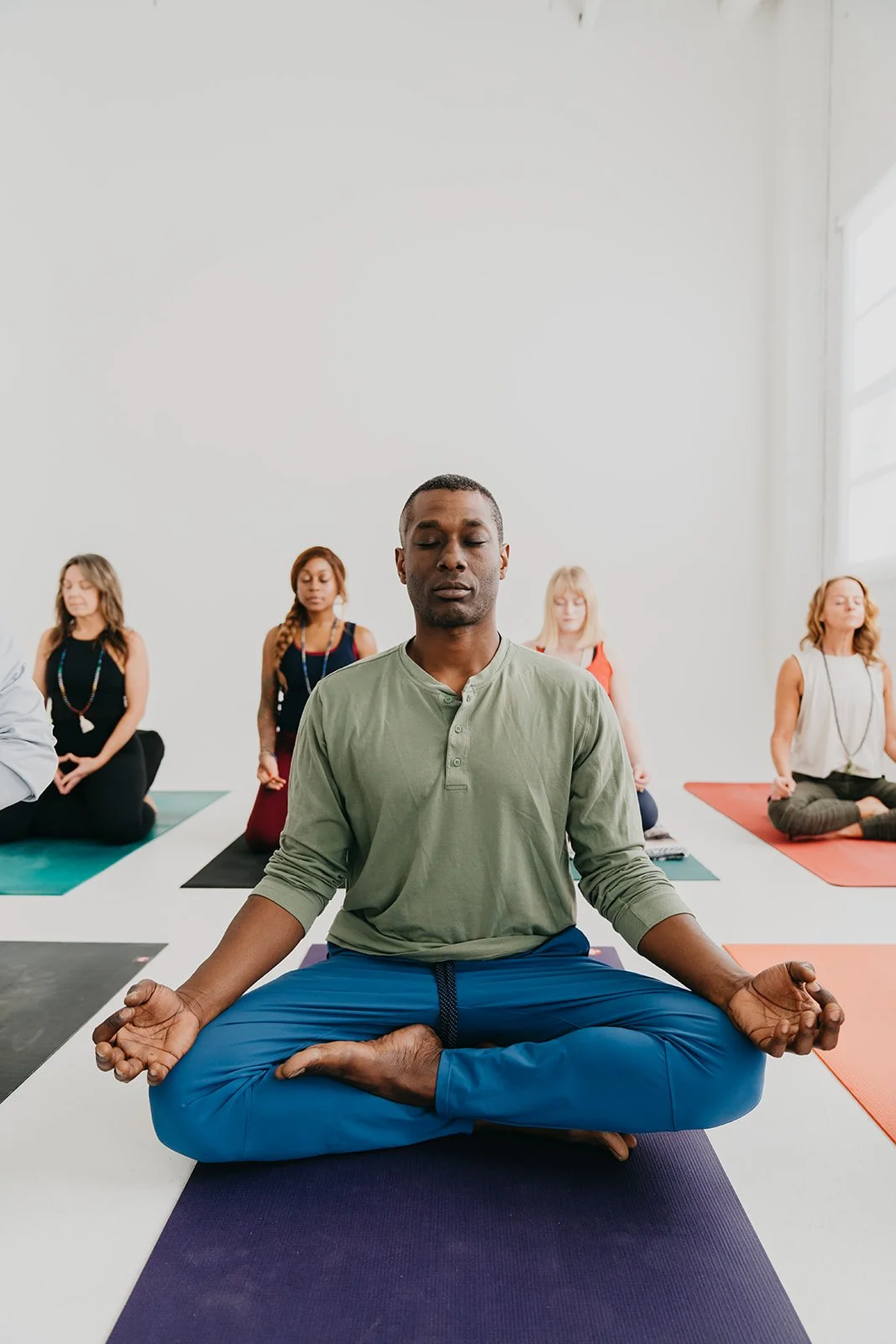
I make a joke in class that always lands.
I tell my students that one of the most powerful practices in yoga is to stop "should-ing" on yourself.
You can imagine why that gets a laugh.
But I mean it. And the more I teach, the more I believe that the "should" voice is one of the most common forms of violence we commit, against the people around us and especially against ourselves. Every single day.
Most students who hear the word ahimsa think: non-violence. Don't hurt people. Don't hurt animals. Eat plants. That's not wrong. But it's a fraction of what this teaching actually contains.
Ahimsa Meaning in Yoga
Ahimsa is the first of the five Yamas, the ethical foundations that open Patanjali's Yoga Sutras. The Yamas form the first of yoga's eight limbs, and they are not rules handed down to constrain us. They are descriptions of what a person in right relationship with themselves and the world actually looks like.
The word ahimsa comes from the Sanskrit root himsa, meaning harm or violence. The prefix a negates it. So the direct translation is non-harming, or non-violence.
But translation only gets you so far.
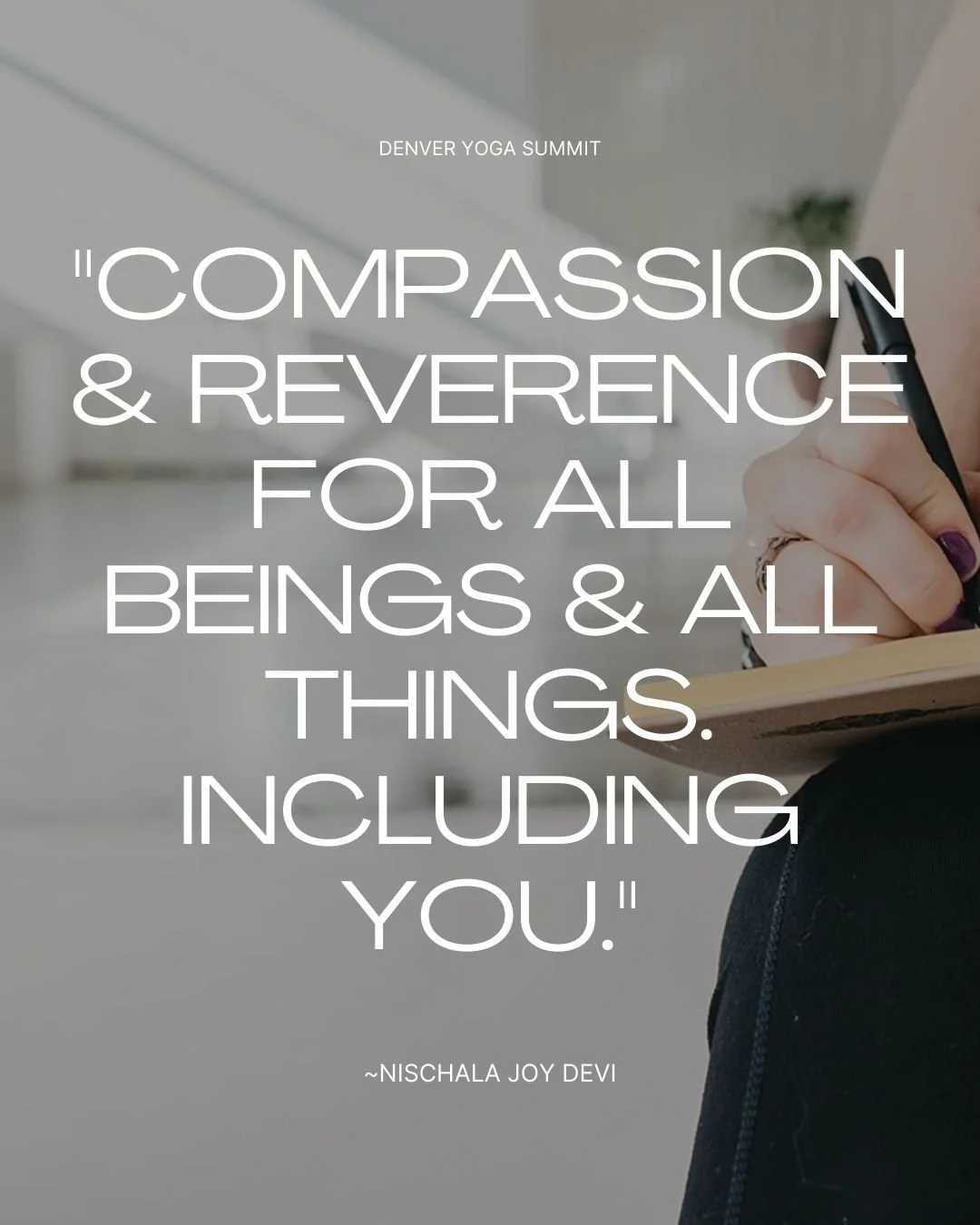
whose work in The Secret Power of Yoga offers a feminine reading of Patanjali's Sutras, translates ahimsa as "compassion and reverence for all beings and all things." That framing shifts everything. Ahimsa is not only about what you stop doing. It is about what you actively bring. Compassion. Reverence. Presence.
Reverence shows up in how we handle the world around us. Closing a drawer gently instead of slamming it. Putting your phone down when someone is talking to you. These are not small things. They are the practice made physical.
The Violence We Don't See
When most of us think of violence, we picture something dramatic and external. But the violence that does the most damage in daily life is quiet, constant, and largely invisible because it lives inside us.
It is the voice that catalogues every place you fell short today. The internal monologue that runs from the moment you wake up and find you're already behind. The habit of measuring yourself against an imaginary standard you can never quite reach, and concluding, again, that you are not enough.
Deborah Adele, in her book The Yamas and Niyamas, writes that looking honestly at ourselves takes great courage, and that the looking itself begins to free us. Just being aware begins to heal.
That is where ahimsa starts. Not with grand gestures toward peace. With honest attention to where harm is already living, including inside your own mind.
Ahimsa in the Eight Limbs
The Yoga Sutras describe eight limbs of practice. The Yamas are the first limb and ahimsa is the first Yama, which makes ahimsa the foundation of the entire system.
That placement is not accidental. Patanjali is making an argument about where practice begins. Not with the body in downward dog. Not with breath control or meditation. With the quality of your relationship to life itself. Whether you move through the world as a source of harm or as a source of care.
Ahimsa applies to thought, word, and action. Yoga philosophy teaches that harm can be done in all three registers, and that practice involves bringing awareness to all three.
A violent thought that stays a thought still does something. It shapes your nervous system, your mood, the quality of your presence in a room. Ahimsa asks you to notice that thought before it becomes a pattern, and to meet it with something more honest than self-attack.
What Ahimsa Is Not
Ahimsa is not passivity. It does not ask you to be silent when something is wrong, to absorb harm without naming it, or to call cruelty kindness because confronting it feels uncomfortable.
Patanjali teaches the Yamas in relationship to each other. Ahimsa without satya (truthfulness) becomes complicity. You can cause harm by staying quiet just as surely as by speaking harshly. The practice is learning to hold both: honest and kind. Clear without being cold.
Ahimsa also does not mean your needs matter less than everyone else's. This is a misreading that affects a particular kind of person, usually someone who came to yoga because they were already running on empty from giving everything away. The practice does not ask you to give more. It asks you to include yourself in the circle of beings worthy of compassion and reverence.
That word "all" in Nischala Joy Devi's translation is doing a lot of work. Compassion and reverence for all beings. All things. You are in that.
Why This Teaching Still Matters
We live in a moment of remarkable collective stress. The world is noisy, demanding, and in many places, genuinely frightening. Reactivity is everywhere and it is contagious.
Ahimsa is not a naive response to that. It is a disciplined one. It asks: before I act, before I speak, before I decide how to respond to this moment, what is actually coming from clarity? And what is coming from the wound?
That question slows things down just enough to make a different choice possible.
That is the yoga philosophy of ahimsa. Not a rule about harm. A practice of returning, again and again, to care.
This post is part of the Denver Yoga Summit's ongoing Yamas and Niyamas series. Continue reading: Ahimsa in Daily Life: What Non-Violence Actually Looks Like Off the Mat and Ahimsa for Yoga Teachers.
Come Practice With Us
Come practice ahimsa with us in person at the Denver Yoga Summit: three days outdoors at Chatfield Farms, in community.
If you're new here and want to know why we're creating this, read our origin story.
Brittany Hopkins Switlick is the Founder and Director of the Denver Yoga Summit and lead teacher at Lotus Yoga School. She is an E-RYT 500 and author of the Amazon #1 New Release Dancing with Our Selves.
Post updated March 5, 2026