

Ahimsa for Yoga Teachers: Non-Violence in the Room You're Holding
Subtle violence can creep into teaching without us noticing it.
It shows up when we hold too tightly to how we think a pose should look. When we over-correct a student whose body is actually doing something right but doesn't match our image of the shape. When we talk over silence because silence feels like something went wrong.
That tightness is not discipline. It is fear dressed up as standards. And for most teachers, it comes from a place of genuine care that has somewhere along the way become control.
Ahimsa for yoga teachers starts with honesty about this. Not self-attack, that would just be more himsa. Honest looking. The kind Deborah Adele describes when she writes that awareness itself begins to heal.
You Are in the Room Too
Students feel what you bring in before you say a word. They feel whether you arrived for them or are working through a checklist. Whether the class is an expression of your actual practice or a performance you've run so many times it no longer costs you anything.
I have walked into rooms having absorbed hard news that morning. Feeling unsteady. Wondering whether I have anything real to offer. The pressure yoga teachers can feel in those moments, to be a source of calm for a room full of people who are also carrying a lot, is its own kind of violence if we let it become a demand we make of ourselves unconditionally.
Ahimsa toward yourself as a teacher means accepting that you can only offer what you actually have. Not what you think you should have. Not the version of you that shows up in the highlight reel. The version that walked in today.
That’s a truer one.
Non-Violence in How You Teach
Ahimsa shows up in teaching in specific, practical ways.
In your corrections. The most common form of himsa in the classroom is the correction that serves the teacher's need for the pose to look right more than the student's need for honest feedback. Before you adjust someone, ask: is this for them, or is this for me? Does their body need this, or does my image of the pose need this?
In your silence. Filling every moment with instruction leaves no room for students to feel their own experience. Some of the most powerful teaching happens when you say nothing. A well-placed pause, a breath, a moment of stillness, these are not absences of teaching. They are the practice itself.
In your pacing. A teacher who rushes through a sequence because they planned too much content is modeling the exact opposite of what most of us are trying to teach. Slowing down, trusting that less is more, letting a pose breathe, that is ahimsa in action.
In what you choose to say. Not every insight needs to be shared. Not every cue you thought of belongs in the room. The discipline of knowing what to leave out is harder than knowing what to include. The class that tries to teach everything teaches nothing.
Carrying Your Students' Struggles
There is a version of harm that comes from caring too much.
When a student is going through something difficult, it can be tempting to feel responsible for fixing it. To stay available past the point of your own capacity. To absorb what they are carrying because it feels like the compassionate thing to do.
But their growth is theirs. Witnessing it without needing to resolve it is one of the more advanced forms of ahimsa in teaching. You are not the solution to what they are working through. You are a consistent, caring presence. That is enough, and it is substantial.
The boundary is not coldness. It is what allows you to keep showing up.
When You Are Not Okay
I have taught through grief. Through my own difficult transitions. Through mornings when the weight of the world was specific and heavy.
Deborah Adele writes that it takes more courage to sit quietly in the awareness of our own moral weakness than to try to fix it. I think that applies to our human limitations too. It takes courage to walk into a room and say, through your presence and your sequencing and the way you hold space: I don't have all the answers either. But I'm here.
That is ahimsa in action. Not the performance of having arrived. The honest report from the path.
Your students can feel the difference between someone teaching from theory and someone teaching from truth. They may not name it. But they feel it. That feeling is trust. Trust is what makes your teaching matter beyond the room.
A Metta Practice to Offer Your Students
The loving-kindness meditation (Metta) is one of the most direct expressions of ahimsa in practice. It trains the direction of attention toward care, starting with oneself and moving outward.
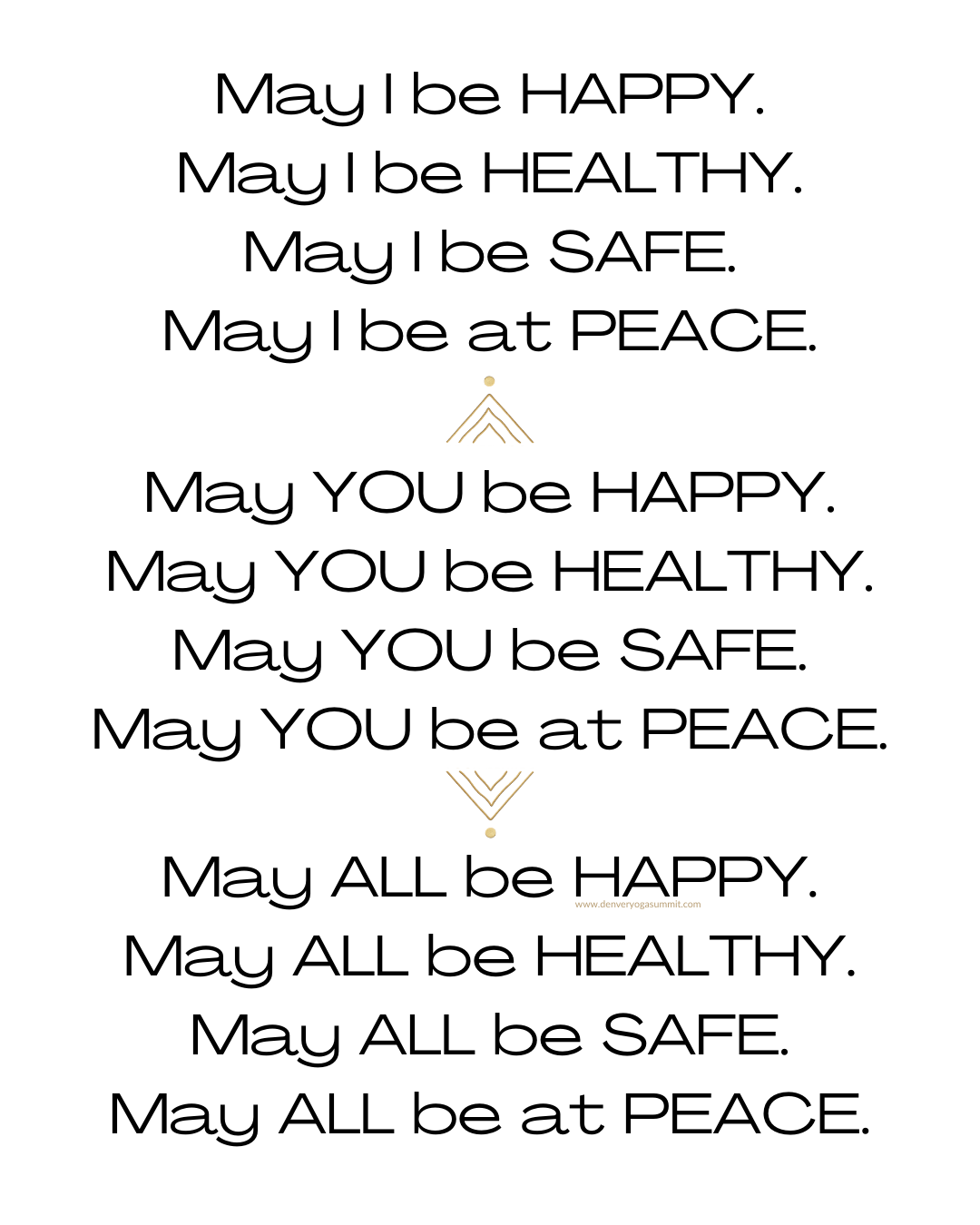
This practice works in a class context because it makes the teaching embodied rather than conceptual. Students don't need to understand ahimsa philosophically to feel what happens when they repeat may I be at peace toward themselves for the first time in a long time.
Begin the practice with the self. Stay there until the room settles. Then move outward: someone they love easily, someone neutral, someone they find difficult. Close by extending it to all beings everywhere. Watch what happens to the room.
Journal Prompts for Teachers
These are for your own practice, your teacher journal, or a training conversation.
1. Where in your teaching are you fully present? Where are you performing presence? Be honest. There is a difference and you know what it feels like.
2. What corrections do you make most often? Are they for the student or for your image of the pose?
3. Where are you carrying your students' struggles past the point of your own capacity? What would it look like to put that down?
4. When did you last teach something that surprised you? That cost you something real? That felt like genuine practice rather than execution?
This post is part of the Denver Yoga Summit's Yamas and Niyamas series. Start with What Is Ahimsa? or read Ahimsa in Daily Life.
The Denver Yoga Summit's September gathering at Chatfield Farms includes sessions created specifically for teachers. Join us here.
Brittany Hopkins Switlick is the Founder and Director of the Denver Yoga Summit and lead teacher at Lotus Yoga School. She is an E-RYT 500 and author of the Amazon #1 New Release Dancing with Our Selves.
Post updated March 20, 2026